
Rubber tracks carry loads across construction sites, farms, military environments, and snow-covered terrain. Their production joins rubber compounds, steel reinforcement, large molds, and extended curing cycles. Effective rubber track solutions must keep placement, tension, force, temperature, and time within controlled limits.
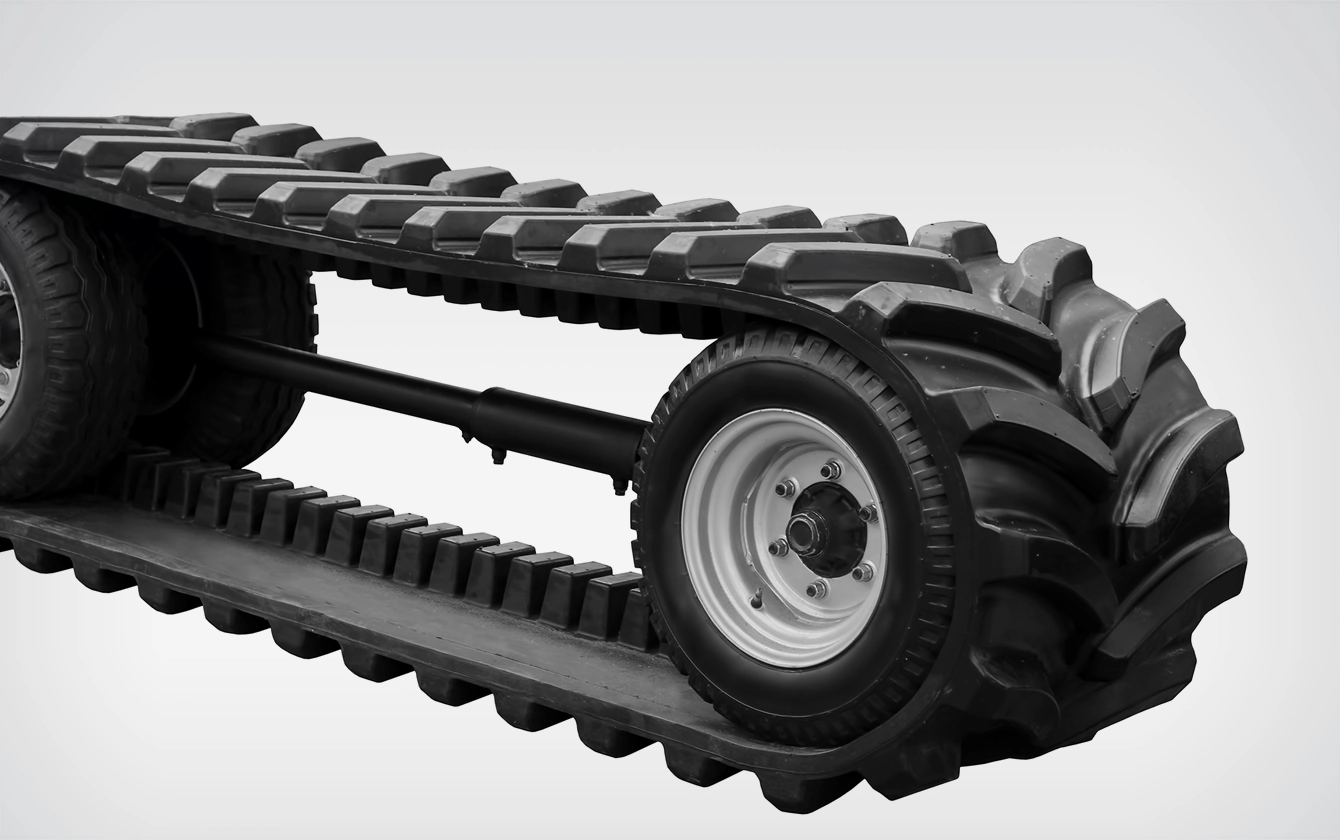
Rubber tracks solutions are stable only when the production line manages the whole sequence. Material preparation, loading, cord alignment, clamping, vulcanization, demolding, and inspection create connected sources of variation. A press setting cannot correct an input that was already misplaced.
Input control protects the track structure
Compound batch, storage condition, prepared dimensions, reinforcement specification, and mold cleanliness are expected to be verified before loading. These factors affect flow, bonding, and geometry. Identified inputs make later quality results traceable to real production conditions.
For each rubber track solutions program, capability must be calculated by track family and verified across reinforcement position, cure condition, dimensions, and release results. This prevents mixed averages from hiding a weak mold or recipe and gives production planning a reliable basis for scheduling future campaigns.
In Dekuma‘s track line, feeding, cord-controlled vulcanization, demolding, and retrieval are coordinated as successive production stages. Controlled handling may reduce manual work around hot and heavy products. Position sensors are required to confirm that the uncured package is ready before closing begins.
The support method must avoid shifting layers or stretching material during transfer. Gripping points, speed, and alignment references depend on track size. Recovery procedures need to also protect partially loaded material if an automatic movement stops.
First-off approval after a compound, mold, or size change is expected to confirm weight, dimensions, reinforcement position, and surface condition. This step establishes a clean boundary between setup work and unrestricted production.
Tension and force maintain dimensional consistency
A rubber tracks solutions line uses constant steel-cord tension to preserve reinforcement placement. The approved tension range should come from trials with the intended design, cord, and compound rather than one generic value.
Clamping force must suit projected pressure and mold area. Dekuma’s published track-machine range extends from 200 to 900 tons for different widths and circumferences. Platen size, working space, utility load, and frequent product formats should guide selection alongside maximum capacity.
Guides, platens, locks, and mold surfaces influence force distribution. Regional flash, thickness, or bonding differences can signal alignment or wear. Cavity and location-based inspection gives maintenance teams stronger evidence than one pooled average.
During closing, a low-pressure phase can flag interference before the clamp reaches high force. Automatic loading increases the need for confirmation because an operator may not inspect the entire closing path during every cycle.
Curing stability depends on heat and time
Vulcanization requires temperature, pressure retention, and sufficient time to develop the target properties. Long molds can contain thermal gradients. Distributed measurements and periodic mapping reveal conditions that a central display may conceal.
The Dekuma line uses a curing shutdown function that can stop the main motor while maintaining locked pressure during appropriate hold periods. Energy benefits should be measured per accepted track and include heating, handling, standby, and auxiliary loads.
B&R controls store production recipes for different track types. Access restrictions and revision history protect approved settings. An adjustment should record its purpose and validation result so temporary troubleshooting does not become an undocumented standard.
iSee4.0 brings energy and core curing variables into a common monitoring record for process analysis and remote oversight. Data should be connected to product, mold, material lot, and inspection findings before it is used for process decisions.
Maintenance keeps trends inside the window
Rubber track solutions require coordinated maintenance of heating, hydraulics, clamping, tensioning, sensors, feeding, and demolding. Minor delays or repeated alarms may reveal deterioration before a complete failure. Parts planning should consider lead time and production consequence.
Sampling should cover different positions along the mold and different stages of the run. Track weight, dimensions, cure evidence, surface condition, and reinforcement alignment provide complementary signals. Long products can hide localized variation inside an acceptable overall result.
Measurement methods must be capable of detecting the specified differences. Fixtures, gauges, and operator technique should be verified so apparent movement is not created by the inspection process. Reference samples help maintain comparability across shifts.
After mold service, a controlled release should confirm alignment, temperature distribution, tension, clamp response, and first-off quality. Production should not return directly to full automation merely because the repaired mechanism moves.
Capacity analysis should include material preparation, loading, cure, demolding, inspection, changeover, and minor recovery. This wider view prevents investment in a faster press when the true constraint lies elsewhere in the line.
Process capability should be reviewed separately for each track family. Combining different widths or constructions into one average can conceal a weak configuration, delay corrective action, and leave production teams without a reliable baseline for the next campaign.
Stable rubber tracks solutions arise from controlled inputs, reinforcement tension, uniform curing, reliable handling, and contextual data. When these elements share one traceable process, teams can identify causes quickly and maintain consistent output across track formats. Long-term records can reveal whether a mold, material family, or seasonal condition repeatedly narrows the process window, supporting preventive action before the next production campaign.