
Thermal management is one of the most important design challenges for modern inverter systems. As industrial equipment becomes smaller and more integrated, manufacturers must develop compact inverters that deliver high performance while maintaining reliable heat dissipation. Heat sinks play a critical role in controlling temperature, but their installation requires careful engineering to balance space limitations, cooling efficiency, and structural stability.
For industrial buyers, understanding how a variable frequency drive manufacturer manages heat sink integration can provide valuable insight when selecting drive solutions. Advanced design approaches allow compact inverter products to achieve stable operation while supporting demanding automation applications.
Why Heat Sink Design Matters in Compact Inverter Development
Power conversion components inside an inverter generate heat during operation. Semiconductor devices, including insulated gate bipolar transistors (IGBTs) and other switching components, experience thermal stress when handling high currents and frequent switching cycles. Without effective heat dissipation, excessive temperatures may reduce component lifespan and affect system reliability.
A compact inverter creates additional challenges because internal space is limited. Engineers must arrange components carefully to ensure heat can transfer away from critical areas without increasing product dimensions. The heat sink must be positioned and secured effectively while maintaining airflow paths and electrical safety requirements.
For a variable frequency drive manufacturer, heat sink design is therefore not only a mechanical issue but also a key part of overall product performance. The integration process involves thermal simulation, structural design, material selection, and manufacturing precision.
Engineering Approaches for Securing Heat Sinks Inside Inverters
Manufacturers use different methods to fasten heat sinks depending on inverter structure, power rating, and application requirements. Common approaches include mechanical mounting brackets, screws, thermal interface materials, and integrated housing designs.
Mechanical fasteners provide strong connections between heat sinks and power modules, ensuring consistent contact during long-term operation. Thermal interface materials such as thermal pads or compounds help reduce air gaps between surfaces, improving heat transfer efficiency.
For smaller inverter designs, component layout becomes especially important. Engineers must consider the distance between heat-generating parts and the cooling structure while maintaining enough room for wiring, control boards, and protection components.
A professional variable frequency drive manufacturer combines these mechanical and thermal considerations during development. This helps create products that remain reliable under continuous industrial operation.
Balancing Performance and Space Efficiency in a General-Purpose Inverter
Industrial customers often require drives that can fit into limited control cabinets while still providing stable motor control. This demand has increased the importance of optimized thermal solutions in general-purpose inverter designs.
A general-purpose inverter needs to support various applications, including pumps, fans, conveyors, and manufacturing equipment. Since operating conditions differ significantly, the cooling system must provide enough thermal capacity across multiple load scenarios.
Efficient heat sink integration allows manufacturers to reduce unnecessary product size without compromising reliability. Through improved component placement and thermal optimization, modern inverter designs can achieve better performance within smaller enclosures.
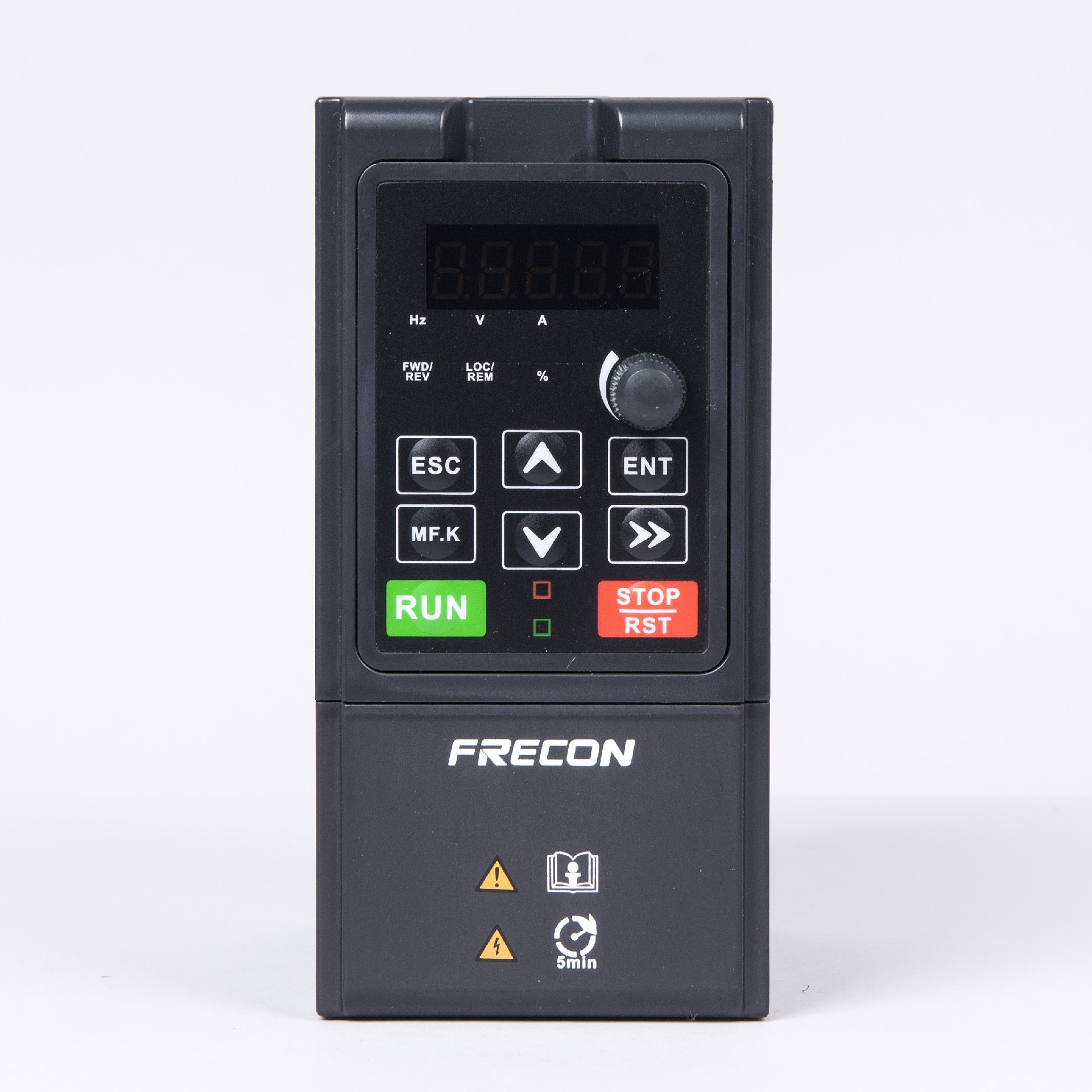
FRECON’s FR150A Series Multifunctional Inverter reflects this development trend. Built on FRECON’s latest technology platform, the series provides high torque performance, reliable operation, and a wide speed control range. Its multifunctional design supports applications such as equipment upgrades, automation systems, and specialized industrial solutions.
How FRECON Designs Compact Drive Solutions for Industrial Applications
When selecting an inverter supplier, industrial users often evaluate product flexibility, control capability, and application adaptability in addition to physical design. A compact inverter must provide more than reduced dimensions; it should also support efficient integration into complete automation systems.
The FR150A series multifunctional inverter includes built-in PID functions, simple PLC capabilities, programmable I/O terminals, RS-485 communication, and analog input/output. These functions allow users to connect the drive with different control systems while maintaining operational flexibility.
For equipment manufacturers and system integrators, this type of design reduces the need for additional control components. A compact inverter with integrated functions can simplify cabinet layouts and support more efficient equipment development.
Manufacturing Precision Supports Reliable Thermal Performance
The process of fastening heat sinks requires manufacturing accuracy. Poor contact between the heat sink and heat-generating components may reduce cooling efficiency, while improper mechanical installation can affect long-term stability.
A capable manufacturer must maintain strict production standards to ensure every unit meets expected performance requirements. This includes accurate assembly processes, quality inspections, and testing procedures that verify thermal and electrical performance.
As an experienced variable frequency drive manufacturer, FRECON focuses on industrial automation, energy efficiency, and green new energy applications. Its product portfolio includes VFD inverters, servo system drivers, and solar inverter solutions designed for different industrial environments.
By combining engineering knowledge with manufacturing capability, suppliers can provide inverter products that meet the needs of automation equipment developers and industrial users.
Selecting the Right Inverter Partner for Long-Term Reliability
Choosing an inverter supplier involves evaluating more than technical specifications. Industrial buyers should consider whether a manufacturer has the engineering capability to solve practical challenges such as thermal management, product integration, and application adaptation.
A reliable supplier should continuously improve product designs to meet changing industrial requirements. Heat sink integration represents one example of how detailed engineering decisions influence overall inverter performance.
FRECON’s experience in drive technology enables it to provide solutions for various industrial applications. From general-purpose inverter models to specialized drive systems, the company develops products focused on reliable operation and flexible control.
Building More Efficient Drive Systems Through Advanced Design
Compact inverter development requires a combination of thermal engineering, mechanical optimization, and intelligent control technology. Effective heat sink fastening methods allow manufacturers to create smaller products while maintaining stable performance in demanding environments.
For businesses searching for automation solutions, working with an experienced variable frequency drive manufacturer can help ensure better product reliability and application support. FRECON continues to develop inverter technologies that balance compact design, functional flexibility, and industrial performance. Its FR150A Series demonstrates how modern inverter solutions can support equipment upgrades and automation projects with dependable control capabilities.