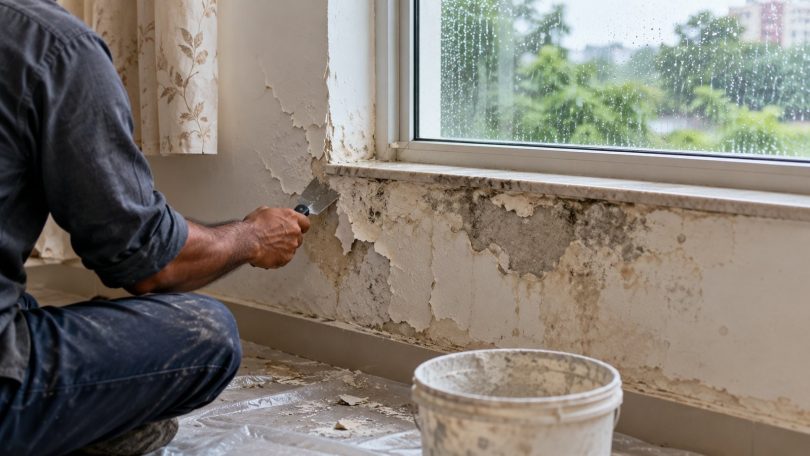

A freshly painted wall should hold its colour, not develop bubbles near the window or start shedding flakes after a spell of rain. Yet these problems often have less to do with the paint itself and more to do with moisture trapped underneath. Damp patches, fine cracks and water seeping through exterior walls can all affect the finish.
This is where waterproofing services can help. By addressing water ingress before repainting, you can protect the wall surface and give the new coat a better chance of lasting. To prevent these issues from returning, let us see what causes paint to peel or bubble and how moisture gets beneath the surface in the first place:
What Causes Paint to Peel or Bubble in the First Place?
Paint does not start peeling without a reason. Sometimes rainwater gets behind the wall; in other cases, a plumbing leak or poor surface preparation is to blame.
Rainwater Infiltration through External Walls
Small cracks in the outer walls can let rainwater seep in, especially during heavy monsoon downpours. You may see paint bubbling around windows or damp patches creeping across the wall. Applying a fresh coat, even in a bright yellow colour or other shades, won’t solve the problem of discolouration if water is still getting through.
Plumbing Leaks and Bathroom Seepage
A leaking pipe inside the wall or water escaping from a bathroom can damage paint on the other side. The affected area may feel damp, develop bubbles or show discoloured patches. These signs can take time to appear, so check the source before planning repairs.
Poor Surface Preparation
Paint won’t stick well if the wall is dusty, damp or covered in loose flakes. Sometimes, the trouble starts before the painting even begins. A fresh coat over peeling paint may look fine at first, but the same patches can start lifting again.
Humidity and Condensation
Ever noticed water droplets on bathroom walls after a hot shower? That moisture has to go somewhere. It can settle on surfaces in poorly ventilated spaces and impact the paint over time. If the wall keeps feeling damp, it is best to check what is causing it.
How Does Waterproofing Help Prevent Paint from Peeling and Bubbling?
A fresh coat of paint won’t do much if water keeps finding its way into the wall. Waterproofing can help in areas where rain or seepage is the cause, but the treatment needs to align with the problem.
Reducing Water Seepage Through Walls
Rain doesn’t always come through a big, obvious crack. It can seep through tiny gaps in the plaster or around a window frame, then leave damp marks inside. A good waterproofing treatment can help keep water from getting in at these points. This becomes very important in the monsoon, when walls may take longer to dry out. Before repainting, make sure the source of the leak has been dealt with.
Keeping the Surface Ready for Painting
Even good-quality paint struggles to adhere to a damp wall. Once the source of moisture has been addressed, the affected surface needs enough time to dry before repainting begins. Loose paint should be removed, and the wall must be prepared before applying a fresh coat.
Protecting Vulnerable Areas
Some parts of a house face rain and wind every day. Think of an open terrace after a night of heavy showers or a bathroom floor that stays wet for hours. Without proper protection, moisture can work its way into nearby walls and ceilings. Waterproofing can help, but first, find out where the water is coming from. If a pipe is leaking behind the wall, that needs fixing before any coating is applied.
Which Areas of Your Home May Need Waterproofing?
A leaking roof is a problem, but water can get in through smaller gaps around the house. Be on the lookout for damp patches, flaking paint or a musty smell, particularly after a rainy spell.
- Exterior walls– Check the outside walls again after heavy rain. Water can get in through the cracks in the plaster and the gaps around the window frames. If paint starts flaking or a patch stays damp long after the weather clears, the wall may need a closer inspection.
- Roofs and terraces– Flat terraces can hold puddles if the water has nowhere to go. Water standing for a period of time can reveal weaknesses in the waterproofing layer. Before the monsoon arrives, check for cracks, worn patches and blocked outlets.
- Bathrooms– Leaking pipes, worn grout and gaps around fittings can carry moisture into adjoining walls. Bubbling paint on the other side of a bathroom wall may point to seepage.
- Balconies– Rainwater can enter through damaged floor joints or collect near the wall edges. Make sure the drainage outlet is clear, and water flows away properly.
- Window frames and door edges– Worn sealant can leave small openings where wind-driven rain enters. Inspect the joints if damp marks appear around the frame.
Conclusion
Peeling paint and bubbling walls are often signs that moisture needs attention, not just a fresh coat of paint. Therefore, you should check for leaks, cracks and damp patches before working on any repairs. The right waterproofing treatment can help protect vulnerable surfaces, but the wall must dry properly before repainting. If the same patch keeps returning, get the source checked rather than covering it up again. Early attention can save you from repeating the repair later.