
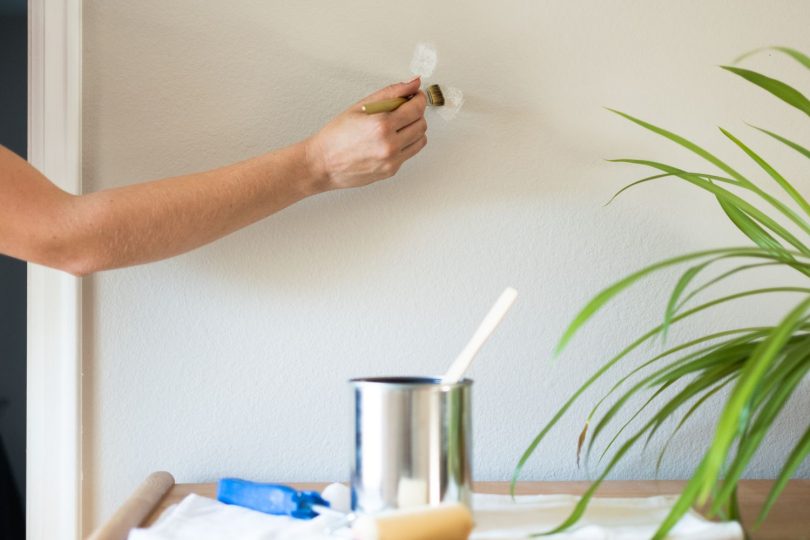

A scuff on a hallway wall loses to a damp cloth in about thirty seconds. Crayon, ink, and rubber shoe marks do not. They sit inside the paint film rather than on top of it, which is why plain water barely touches them. A wall eraser is built specifically for that second category, an abrasive foam engineered to lift pigment without dragging the paint’s own finish away with it. Not every eraser survives that job.
Melamine foam was never invented for cleaning. BASF launched the first commercial version in 1984 under the trade name Basotect, sold originally as a soundproofing and thermal insulation product for construction sites.
Its second life as a household cleaning tool came later, once people noticed the foam’s rigid open cell structure worked almost like microscopic sandpaper. That same structure is why a cheap block wears through in days rather than months.
The Mark Sits Deeper Than It Looks
Crayon wax and rubber bond into the microscopic texture of a paint film. Water sits on the surface and cannot reach that layer at all.
Scrubbing with anything genuinely abrasive risks taking a thin layer of the paint’s own sheen away along with the mark, and matte finishes show this kind of damage far more visibly than gloss ones do. A dulled patch on an otherwise even wall. That is the real risk, not the original scuff.
Flat and low sheen paints, the finish used in most rental properties, are particularly unforgiving here. A single overzealous pass with a rough sponge and the wall now has two problems where it used to have one.
A Longer Lasting Core Changes the Maths
The core used in this product is engineered to last up to ten times longer than standard melamine, according to the manufacturer’s own product listing. That single figure changes how the product actually gets used across a household. A hallway collecting weekly scuffs, a kitchen wall behind a rubbish bin, spots that would chew through an ordinary block within a month of daily contact.
A wall eraser built around that longer lasting core stops being a disposable item bought every few weeks and starts behaving like a proper household tool. Buy three cheap blocks across a year at roughly two to three dollars each and the total often exceeds one product built to survive the same period.
What the Backing Actually Does
- A FlexTexture foam backing to press against, unlike a soft block that folds flat under real pressure
- Small textured gems embedded through that backing, adding extra bite against caked on grime before the erasing side finishes the job
- Bathroom soap scum on tile, porcelain, and glass, since the same dual sided tool is not limited to walls
- One product replacing two separate scrubbers in the cupboard under the sink
Getting the Technique Right Matters Too
A quick dry wipe does almost nothing. The foam needs a genuine soak in plain water, no soap or chemical layered on top, since anything else risks reacting unpredictably with whatever product previously touched that wall.
Light pressure works better than heavy pressure here, counterintuitive as that sounds. Push too hard and the foam compresses flat instead of gliding across the surface, wasting the exact structure doing the actual cleaning.
Two or three passes usually resolves a scuff completely. If a mark survives beyond that, it has likely penetrated past the paint’s surface layer entirely, and no amount of further scrubbing finishes the job without risking the wall itself.
Is It Worth Keeping One in Every Room
Not every household needs to think this hard about an eraser. Rental properties facing a bond inspection do, and so does any kitchen taking daily abuse near a stovetop or bin. Real estate inspections have a habit of finding every mark a household stopped noticing months ago. A cheap, small thing to keep in a drawer, right up until the day it quietly saves a paint job that would have cost considerably more to put right.