
In silicone sealant production, the final product quality is closely connected to the condition of the raw materials used at the beginning of the process. A sealant may appear simple from the outside, but its performance depends on complex interactions between polymers, additives, curing agents, and fillers.
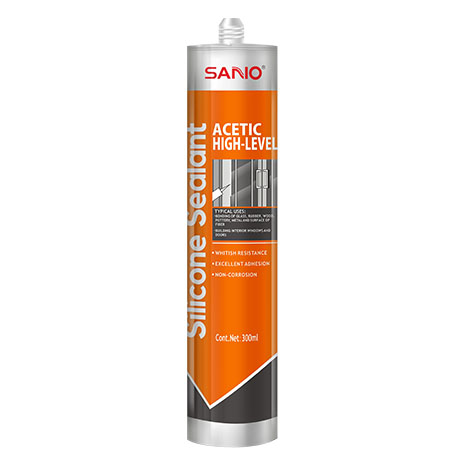
Consistent sealant performance relies on stable raw materials. Producers must address inconsistent viscosity, unpredictable curing, and batch variation. SANVO treats material quality control as fundamental to reliable, batch-to-batch consistency.
A professional silicone sealant manufacturer relies on high-purity polymer materials because they provide a more stable foundation for efficient production and long-term product reliability.
Polymer Quality Influences the Starting Point of Sealant Development
The polymer is the backbone of a silicone sealant formulation. Before additives or performance modifiers are introduced, the polymer structure already influences many characteristics of the final product.
A high-quality polymer provides predictable chemical behavior, allowing formulators to control important properties such as flexibility, adhesion, and resistance to environmental stress.
When polymer materials contain unwanted impurities, the formulation process becomes more difficult. These substances may interfere with other ingredients, creating unexpected changes during mixing or curing.
For commercial manufacturing, this uncertainty can increase development time and make it harder to maintain consistent product standards across different production runs.
How Impurities Create Manufacturing Challenges
Raw material impurities do not always create immediate visible problems. In many cases, their effects appear gradually during production or after the sealant has been applied.
During manufacturing, inconsistent polymer quality may influence mixing efficiency and material uniformity. The production team may need additional adjustments to achieve the expected texture or flow behavior.
After application, unstable material interactions may affect curing performance, surface appearance, or long-term elasticity.
These issues are especially important for commercial production because even small variations can become significant when thousands of units are manufactured. High-purity polymers help reduce these uncertainties by providing a more controlled starting material.
The Impact of Polymer Purity on Processing Efficiency
Large-scale sealant production requires smooth and repeatable manufacturing operations. Every stage, from material preparation to filling, depends on predictable formulation behavior.
Polymer purity influences several processing characteristics, including:
Mixing consistency
Viscosity control
Dispersion efficiency
Production repeatability
A stable polymer system allows manufacturers to optimize processing conditions more effectively. This can reduce unexpected adjustments during production and improve overall manufacturing efficiency.
For companies producing silicone sealants for commercial markets, better process control means fewer interruptions and more reliable delivery of finished products.
Why Stable Polymer Structures Improve Service Performance
Silicone sealants are often selected for applications where durability is essential. Buildings, industrial equipment, and outdoor installations require sealing materials that can maintain performance despite temperature changes, moisture exposure, and mechanical movement.
The polymer structure directly affects how the cured sealant responds to these conditions.
A well-controlled polymer system supports:
Long-term flexibility
Better recovery after movement
Resistance to environmental aging
More predictable sealing behavior
If the polymer quality is inconsistent, manufacturers may struggle to achieve the right balance between strength and flexibility. A sealant that becomes too rigid may crack under movement, while one with insufficient structure may lose its sealing effectiveness.
High-purity polymer materials provide greater control over these performance characteristics.
Maintaining Product Stability During Storage
Commercial sealants are not always used immediately after production. Products may spend weeks or months in warehouses, distribution channels, or project storage areas.
Raw material quality influences how well a sealant maintains its original properties during this period. Stable polymer components help manufacturers develop formulations with better storage behavior and reduced performance changes over time.
For customers, this means fewer issues related to application consistency after transportation or extended inventory periods.
Shelf stability is particularly valuable for distributors and contractors who need products to perform reliably whenever they are required on-site.
Improving Formulation Flexibility Through Better Raw Materials
Developing silicone sealants for different requirements often involves balancing multiple performance goals. A product designed for architectural use may require excellent weather resistance, while an industrial sealant may need stronger durability under demanding conditions.
High-purity polymers give formulators a more reliable base for adjusting product characteristics. When the polymer behavior is predictable, other formulation components can be modified more accurately.
This flexibility allows manufacturers to develop different sealant solutions without creating unnecessary production instability.
Instead of compensating for raw material variation, technical teams can focus on improving product performance and adapting formulas to specific market needs.
The Business Value of Consistent Raw Material Performance
For commercial sealant producers, material quality affects more than laboratory results. It influences customer satisfaction, production efficiency, and brand reputation.
A sealant product that performs consistently helps reduce complaints related to application problems. It also allows businesses to maintain stronger confidence among contractors, distributors, and end users.
High-purity polymer materials support this consistency by reducing unpredictable changes during manufacturing and application.
For a silicone sealant manufacturer, investing in reliable raw material quality is a long-term approach to improving product competitiveness rather than simply a short-term production decision.
Conclusion
High-purity polymer raw materials play a critical role in determining silicone sealant quality, from manufacturing efficiency to final application performance. They help create more stable formulations, improve production control, and support long-term sealing reliability.
Market expectations are demanding, and commercial producers must respond with products that perform reliably from the start. That response begins with the right material foundation. SANVO addresses this need through quality-driven chemical solutions designed to support dependable sealant performance in real applications.
Understanding the importance of polymer purity allows manufacturers to make better formulation decisions and build silicone sealant products with greater consistency, durability, and market value.