
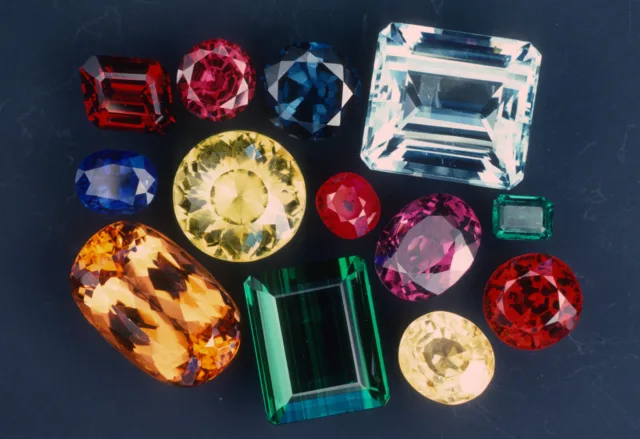

Science is very good at explaining colour in gemstones. Chromium gives rubies and emeralds their distinctive hues. Iron in various oxidation states produces the blues of sapphire and the greens of certain tourmalines. Copper colours paraiba tourmaline. Nitrogen yellows diamond. For most of the coloured gem world, the question of why a stone is the colour it is has a clear and well-established chemical answer. But one category of gemstone has persistently resisted this explanatory framework. The colour in pink diamonds is structural rather than chemical, produced by distortions in the crystal lattice rather than by the presence of a specific trace element, and the precise mechanisms involved were disputed among scientists for decades and are still not fully resolved. This scientific uncertainty has had a remarkable effect on how the market values these stones, and understanding that effect reveals something interesting about how human beings assign worth to things they cannot fully explain.
The Conventional Model of Gem Colour and Value
In most coloured gemstone categories, scientific understanding of colour origin is tightly linked to quality assessment and valuation. Knowing that chromium is responsible for the red in a ruby allows gemologists to assess colour quality against a well-understood standard. Knowing that a specific trace element is responsible for a colour means that the presence, concentration, and distribution of that element can, at least in principle, be measured and compared. Science provides a framework that market valuation can build on.
This model works well for most coloured gems. It allows for consistent grading standards, meaningful comparison between stones, and a rational basis for price differentiation. The finest rubies command higher prices than lesser rubies because the colour that chromium produces is more vivid, more pure, and more consistent in the finest stones than in ordinary ones. Science explains why, and the market prices accordingly.
What the Market Is Actually Pricing
When a significant pink diamond achieves a record price at auction, the number in the headline is real and meaningful. But it is worth understanding what that number actually represents. It represents the collective judgment of serious buyers about the value of an object that is geologically irreplaceable, scientifically not fully explained, and experientially extraordinary. The price is the market’s way of quantifying something that resists quantification, and the difficulty of that task is part of why record prices keep being set and then surpassed.
The market for the finest pink diamonds is, in a meaningful sense, a market for an experience that cannot be replicated by any other object. Other gems can be beautiful. Other gems can be rare. Other gems can be scientifically interesting. But the specific combination that a finest-grade pink diamond offers, colour whose mechanism is not fully understood, rarity that is absolute and permanent, and beauty that produces an emotional response disproportionate to any rational explanation, is not available elsewhere. The market has been trying to price this combination accurately for years, and the consistently rising trajectory of results suggests it has not yet succeeded. The finest specimens may still represent an underpriced convergence of qualities that have no substitute.