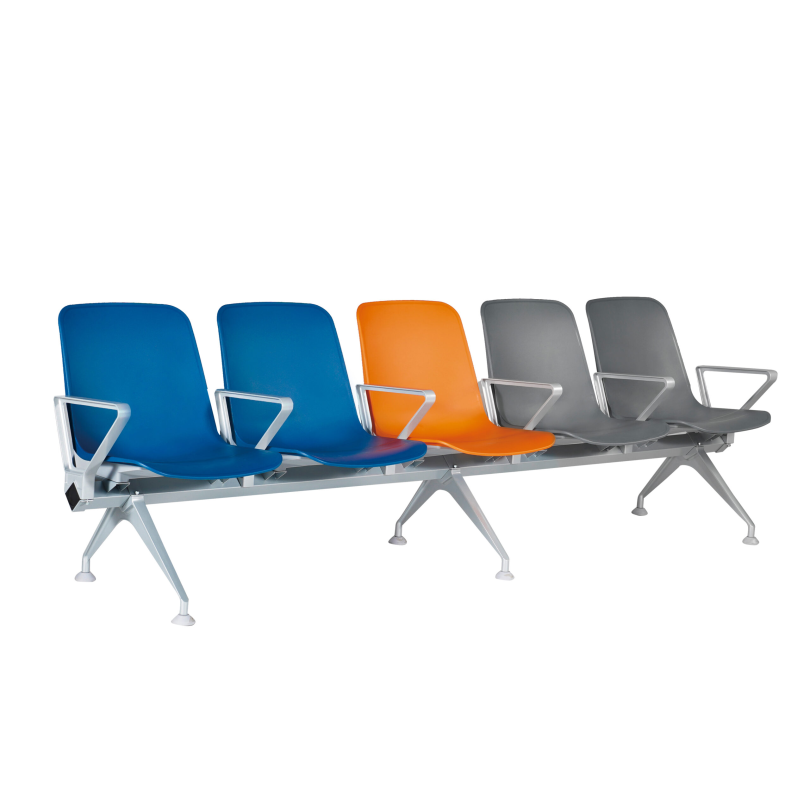

Perforated patterns in airport bench seating can improve comfort because air movement matters in crowded terminals. Passengers may sit for long periods after security checks, flight delays, or transfer connections, and a solid surface can feel warm or restrictive. A waiting area seating solution should therefore combine ventilation with strength, hygiene, and visual order. High-quality perforated steel, aluminium, and stainless steel can give waiting area chairs the structural support needed by transport authorities, airport operators, large enterprises, and overseas agents.
Perforation as a Comfort Feature
The value of perforation depends on both pattern and material. Openings can help airflow across the seat and back while also reducing the heavy visual impression of a long bench row. At the same time, the pattern must not weaken the structure or create difficult cleaning points. Airports, travel terminals, hospitals, and other waiting spaces are high-traffic areas that demand durability, safety, and easy maintenance. For airport bench seating, these requirements should guide hole size, edge finish, surface coating, and frame support. Designers may also combine perforated benches with armrests, end panels, or mixed seating groups so ventilation does not make the terminal feel cold or purely industrial.
Airflow, Cleaning, and Structure
Customization should reflect passenger behavior. In a busy terminal, travelers may sit with coats, backpacks, and carry-on bags, while cleaning teams need fast access between rows. A waiting area seating supplier can help decide where perforated metal is most useful, when armrests should divide seats, and how bench length affects circulation. Leadcom Seating‘s waiting area applications include transportation hubs, healthcare facilities, and corporate or public services, showing that the same material logic may be adapted to different levels of traffic and comfort expectation. Perforated patterns should therefore be reviewed with cleaning teams, not only with designers, because airports depend on fast and repeatable maintenance.
Customization for Terminal Projects
The best perforated design is not simply the most open one. It must balance ventilation, strength, appearance, safety, and maintenance. Government airport projects may also require a design language that looks organized across large halls. Overseas agents should present airport bench seating as a system of structure, finish, airflow, and layout rather than as a single bench model. Leadcom Seating’s focus on solid materials and public-space durability makes waiting area seating a practical choice when the terminal needs comfort that can withstand constant use. This approach allows airport bench seating to provide greater comfort while remaining durable, well ventilated, easy to inspect, and suitable for busy terminals.