
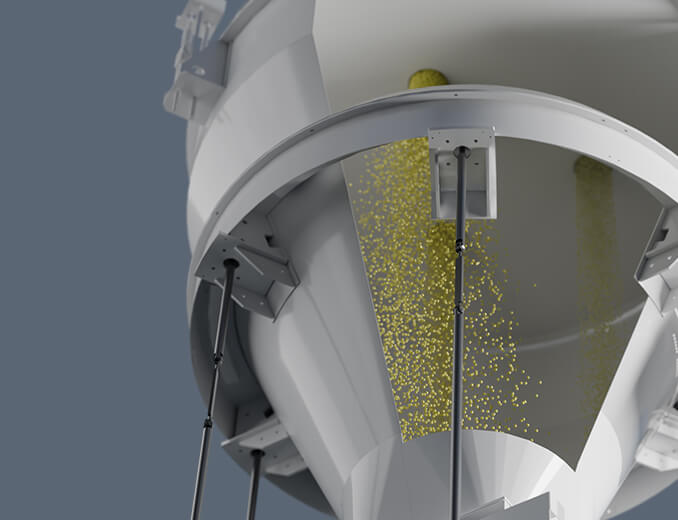

Feed mills monitor particle dimensions closely to ensure that the final product meets specific nutritional and physical requirements. Accurate measurements during the milling grinding process help operators verify that ingredients are processed to the correct consistency, which is vital for efficient digestion and pellet stability.
Sieve Stack Analysis
The traditional approach for determining size distribution involves a series of physical screens. During this method, technicians pass a representative sample through a stack of sieves with varying apertures. This manual verification is highly reliable for standard production runs where large particle distributions are acceptable. It remains a cost-effective solution for facilities that need a straightforward way to monitor their hammer grinder machine performance without significant capital investment.
Laser Diffraction Techniques
More advanced operations sometimes implement laser diffraction to analyze particle sizes. This method works by passing a light beam through the sample, measuring the angle and intensity of the scattered light to calculate the volume distribution. While this requires a higher upfront cost for the equipment, it offers rapid, highly precise data compared to traditional methods. It is particularly useful for detecting small variations in fine-powder products that standard screens might miss during the milling grinding stage.
Analysis Method Comparison
When weighing these two options, facilities look at accuracy versus cost. Sieve stacks provide reliable results for coarse particles, making them the standard for routine plant quality checks. In contrast, laser diffraction provides high precision, which is better suited for research and development or specialized fine-grind applications. Each facility assesses its own requirements to determine which method provides the necessary level of detail for their specific feed formulas.
Integration with Production Systems
Effective quality control requires that data from these analysis methods be applied directly to equipment adjustments. If the analysis shows particles are too coarse, technicians adjust the settings or check the wear on the beaters inside the hammer grinder machine. FAMSUN provides automated systems that support these adjustments, allowing facilities to maintain consistent texture throughout the production process. They ensure that analytical results translate into actionable changes for the grinding line.
Selecting an analysis method depends on the specific goals of the mill and the budget available for quality assurance. Whether using sieve stacks or laser diffraction, the objective is to generate accurate data that improves feed quality. FAMSUN supports these efforts by providing the technology needed to measure and control particle size effectively.