
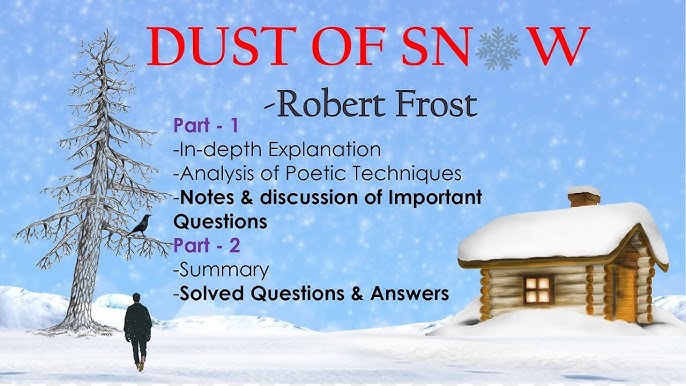

In CBSE Class 10, English is more than just grammar and writing; it’s also about valuing literature and understanding the deeper meanings of prose and poetry. Robert Frost’s short poems “Dust of Snow” and “Fire and Ice,” two of the most well-known in the English curriculum for Class 10, are not just brimming with meaning, but also with beauty, passion, and valuable teachings that inspire and captivate.
This post will not only analyze both poems and examine their content, but also provide practical advice on how to create compelling exam responses. Whether you’re a parent trying to assist your child or a student, this guide will make learning English for CBSE Class 10 not just simple, but also manageable and effective.
Summary:
“Dust of Snow” describes how a crow sweeping snow off a tree transforms the poet’s depressing attitude into a happier one. It serves as a potent reminder that even the tiniest natural events have a way to brighten our spirits.
The crow and the hemlock tree (both traditionally considered negative symbols) ironically cause a positive transformation. This contrast is the poem’s genius.
- Unveiling the literary Magic in “Dust of Snow”Imagery: Visual image of snow falling from a tree.
- Alliteration: “Has given my heart.”
- Symbolism: Crow and hemlock represent gloom; dust of snow symbolizes purity and change.
- Inversion: Changing the usual word order to maintain rhyme and rhythm.
Poem 2: Fire and Ice – The Power of Human Desires
Poet: Robert Frost
Theme: Destructive human emotions like desire and hatred can end the world.
Text of the Poem:
- Some say the world will end in fire,
- Some say in ice.
- From what I’ve tasted of desire
- I hold with those who favor fire.
- But if it had to perish twice,
- I think I know enough of hate
- To say that for destruction ice
- Is also great
- And would suffice.
Summary:
The poem “Fire and Ice” explores two possible scenarios for the end of the world: one using fire, which represents passion, desire, and greed, and another with ice, which represents coldness, hatred, and indifference. He considers how equally capable each is of doing damage.
It acts as a metaphor for how people behave: uncontrolled emotions can cause either individual or even global ruin.
Literary Devices in “Fire and Ice”:
- Metaphor: Fire and ice as human emotions.
- Imagery: The sensation of burning or freezing.
- Symbolism: Fire = desire; Ice = hatred.
- Enjambment: Running of lines without punctuation.
- Irony: Both opposing forces (fire and ice) can cause the same end.
Comparing the Two Poems
| Feature | Dust of Snow | Fire and Ice |
| Mood | Uplifting | Grim and reflective |
| Message | Small moments can bring joy | Extreme emotions can destroy |
| Symbols Used | Crow, Hemlock, Snow | Fire, Ice |
| Literary Focus | Nature’s influence on emotions | Human emotions and their impact |
| Length | 8 lines | 9 lines |
Conclusion:-
The poems Dust of Snow and Fire and Ice are short, but they hold profound meanings that all students in CBSE Class 10 should strive to comprehend. These works by Robert Frost provide insightful understandings of anything from life philosophy to literary appreciation, and engaging with them is a key part of your English literature studies.
Students who comprehend the meanings, emotions, and themes of these poems and who study effectively for tests can improve their test scores and grow to enjoy English literature even more.
Whether you’re starting from scratch or reviewing, follow this guide to make poetry simple and fun. With the correct approach, CBSE Class 10 English can be made incredibly simple.


