
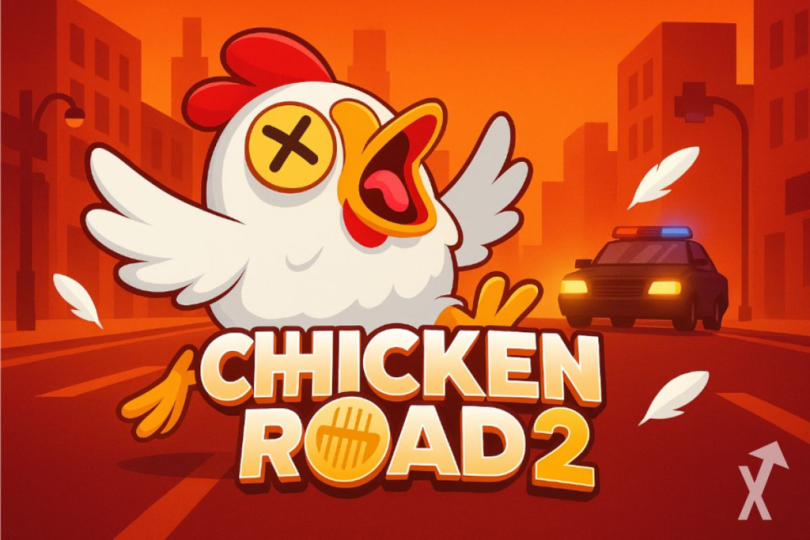

The meteoric rise of Chicken Road 2 in the Indian mobile wagering market is a direct result of a hyper-localized and visually minimalist marketing strategy that transcends regional language barriers. This product’s branding is a masterclass in adapting a digital offering to a market that is culturally segmented yet unified by a demand for simplicity and virality. The visual language—the simple ascending numerical multiplier and the unpretentious chicken figure—functions as a universal digital meme, easily shareable and instantly recognizable from tech hubs like Mumbai to the evolving markets of Chennai and Kolkata.
This strategic focus on iconic simplicity minimizes the need for complex, costly, and multi-lingual localization across India’s vast geography. This allows the Chicken Road 2 https://chicken-road-2.app/ marketing budget to concentrate on high-efficiency channels with a low CPA (Cost Per Acquisition).. Instead of relying on expensive, traditional advertising saturation, the brand successfully leverages social platforms like Telegram, WhatsApp, and YouTube Shorts, prioritizing organic viral spread and peer-to-peer sharing. Unlike complex, navigationally dense competitors, the title offers a product that effectively markets itself due to its instantaneous comprehensibility and high “shareability.” The gaming experience is therefore transformed from a mere wager into a public, social talking point.
The Semiotics of the Icon: The Psychological Appeal of the “Chicken”
The choice of the chicken as the central avatar and talisman for Chicken Road 2 is a brilliant marketing move, as it taps into the globally understood, yet culturally adaptable, concept of “to chicken out” (to lose courage). This idiom instantly translates the game’s core mechanic from abstract mathematics into an immediately relatable psychological conflict: When will the player lose courage and cash out?
The avatar is light, non-aggressive, and successfully bypasses the cultural and regulatory scrutiny often associated with explicit gambling imagery. This allows the brand to integrate seamlessly into social media feeds and local community groups, positioning itself as a piece of harmless, highly consumable content rather than solely a wagering product. The chicken acts as a psychological mirror for the Chicken Road 2 participant’s risk appetite.
| Core Branding Element | Perception Analysis in the Indian Market |
| The Chicken Avatar | Perceived as lighthearted and non-serious, disassociating it from “heavy” traditional gambling. |
| Yellow/Red Color Palette | High contrast, mimicking a traffic light: “Caution” (yellow, multiplier growth) and “Stop” (red, the crash). |
| The Name (Road) | A metaphor for the unpredictable journey of life, which deeply resonates with regional philosophical undertones. |
| Minimalist Interface | A symbol of fairness and the absence of hidden mechanics, significantly boosting platform trust. |
Marketing Channel ROI Benchmarks
While competitors dedicate significant budgets to traditional media (TV and print), the Chicken Road 2 has strategically focused on high-conversion digital channels. This approach has generated a model with a consistently low CPI (Cost Per Install) and a high LTV (Lifetime Value) driven by organic retention.
| Distribution Channel | Avg. CPI (INR) | Engagement (Retention D7) | Primary Marketing Goal |
| YouTube Shorts / Reels | 22–35 | 45% | Viral Reach / Demonstration of Wins |
| Telegram/WhatsApp (P2P) | < 10 (Organic) | 65% | Community Building / Strategy Sharing |
| Banner Networks (Ad Networks) | 40–55 | 30% | Baseline Traffic / Retargeting |
| Local Streaming Platforms | 30–45 | 50% | Direct Trust Building (via local Influencers) |
This structural approach, which combines a minimalist yet powerful brand icon with subtle regional adaptation and strategic digital distribution, makes Chicken Road 2 a social-marketing phenomenon perfectly tailored to the attention economy of the Indian mobile user.
